01
Mechanics and design of field-responsive materials
How electric and magnetic fields interact with microstructure, interfaces and geometry, and how those interactions determine actuation, adhesion and degradation in soft composites.

Assistant Professor of Mechanical Engineering · South Dakota Mines
I study how physical and numerical approximation shape trustworthy prediction: which physics a model must retain, which errors actually change an engineering decision, and where computation is worth spending. I pursue these questions across nonlinear solid mechanics, multiscale and fracture modeling, computational design, and scientific AI, from heterogeneous and active materials to error-controlled neural operators.
35 published works since 2018 $290K PI-led awards 3 graduate researchers
Output
Rendered from raw simulation output and from the group's own teaching material
How electric and magnetic fields interact with microstructure, interfaces and geometry, and how those interactions determine actuation, adhesion and degradation in soft composites.
How matrix cracking, interface debonding, particle fracture and contact interactions compete to control strength, toughness, localization and residual load capacity.
How residuals, error estimates and targeted high-fidelity solves can determine when a reduced or learned model is accurate enough for inference, optimization or design.
Machine design five semesters running, solid mechanics, applied finite element analysis, and a graduate finite element course — six courses across three institutions since 2021. Three graduate students and an undergraduate alumna, an open textbook written as the graduate course runs, and twelve notebooks anyone can execute.
The open implementation behind the method: C++, documented, tested, and citable.
PeriDEM — High-fidelity modeling of granular media consisting of deformable complex-shaped particles JOSS · 2025 · sole author
A continuous finite-element representation of peridynamics with an L2 estimate of order Δt + h²/ε², under the paper's regularity assumptions.
Nodal finite element approximation of peridynamics CMAME · 2025 · first & corresponding author
One residual/tangent correction cut optimization-minimizer relative L2 error from as high as 80% to below 7%, in the reported examples.
Residual-based error corrector operator to enhance accuracy and reliability of neural operator surrogates of nonlinear variational boundary-value problems CMAME · 2024 · sole author
Long-range electrical interactions in a discrete nanostructure pass to a continuum limit that is not simply the naive average: the coarse-grained energy keeps a dipole-scale contribution the pointwise limit discards.
Discrete-to-Continuum Limits of Long-Range Electrical Interactions in Nanostructures ARMA · 2023 · first & corresponding author
Diagnoses where a learned PDE surrogate amplifies error, and repairs the prediction using the residual, with no new labeled data required.
Goal-oriented estimates of model error, used to aid parameter estimation rather than to certify the model.
Goal-Oriented A-Posteriori Estimation of Model Error as an Aid to Parameter Estimation JCP · 2022 · first & corresponding author
Fracture inside arbitrarily shaped, interacting particles: deformation and breakage resolved together with contact, which rigid-particle DEM cannot represent.
Peridynamics-Based Discrete Element Method (PeriDEM) Model of Granular Systems Involving Breakage of Arbitrarily Shaped Particles JMPS · 2021 · first & corresponding author
A pull-off force is one number describing at least four different mechanisms. Separating them is what lets a measurement support a design rule that transfers, instead of one fitted curve.
Effective properties for a composite have to come from somewhere. This project derives them from resolved micro-scale fracture simulations, after first settling which description of the interface to trust.
Magnetic soft composites are designed as if the particle–matrix interface were perfect. This project asks what changes when it is not, and whether that is what sets how long the material keeps working.
Particle-resolved and multifidelity modeling of granular assemblies whose particles deform, break and rearrange under load.
Choosing where to put material and where to put magnetization, at the same time, so a soft structure moves the way a design problem asks it to.
Residual-based estimation and correction of neural-operator error in forward simulation, Bayesian inference and topology optimization.
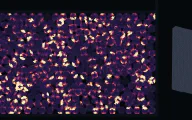
Peridynamics-based discrete element method for granular media with deformable, complex-shaped particles.

Joint material and topology optimization for field-responsive soft materials, extended from FEniTop and built on FEniCSx.

Python implementations of neural operators and the residual-correction schemes, with the notebooks used to test them