active
SDBOR CRG
Neural operators with error estimation and control
Residual-based estimation and correction of neural-operator error in forward simulation, Bayesian inference and topology optimization.
Reliable scientific AI
Goal-oriented estimation of model error with J. Tinsley Oden, then a residual-based corrector operator that cut neural-operator minimizer error from as high as ~80% to below 7% in topology optimization.
Turning correction into a decision gate: for each query, accept the neural-operator prediction, correct it, enrich the model, or fall back to a full solve. Residual and goal-oriented information decide when more computation is worth spending.
Reduced and learned models make large ensembles tractable: hypothesis testing, uncertainty quantification, optimization, experimental planning. But approximation is hardest exactly where the mechanics matters most: where contact changes, cracks nucleate, localization develops, stability is lost, interfaces degrade, materials leave calibration.
The scientific question. How can reduced and learned models accelerate discovery and design while carrying enough evidence to determine when their predictions are adequate, what additional computation or measurement is needed, and how approximation error affects the decision?
The concrete result so far: in topology optimization, one residual/tangent correction reduced minimizer error from as high as ~80% to below 7% across the tested neural-operator surrogates. Earlier goal-oriented work connected approximation error to inference quantities, and Bayesian residual correction showed how surrogate error distorts posteriors and how physics-based correction reduces it.
The aim is a gate rather than a claim of accuracy: for each query, accept, correct, enrich, or solve, spending fidelity only where it changes the answer.
Where the question came from. The same problem arrived first in computational oncology, at the Oden Institute: a mixed-dimensional tumour and vasculature model whose parameters had to be calibrated against imaging, where the practical question was never whether the model was right in general but whether it was good enough for the decision in front of you. The predictive-science questions developed through that work now inform current work on model-error estimation, Bayesian calibration, optimal experimental design and the reliability of learned models.
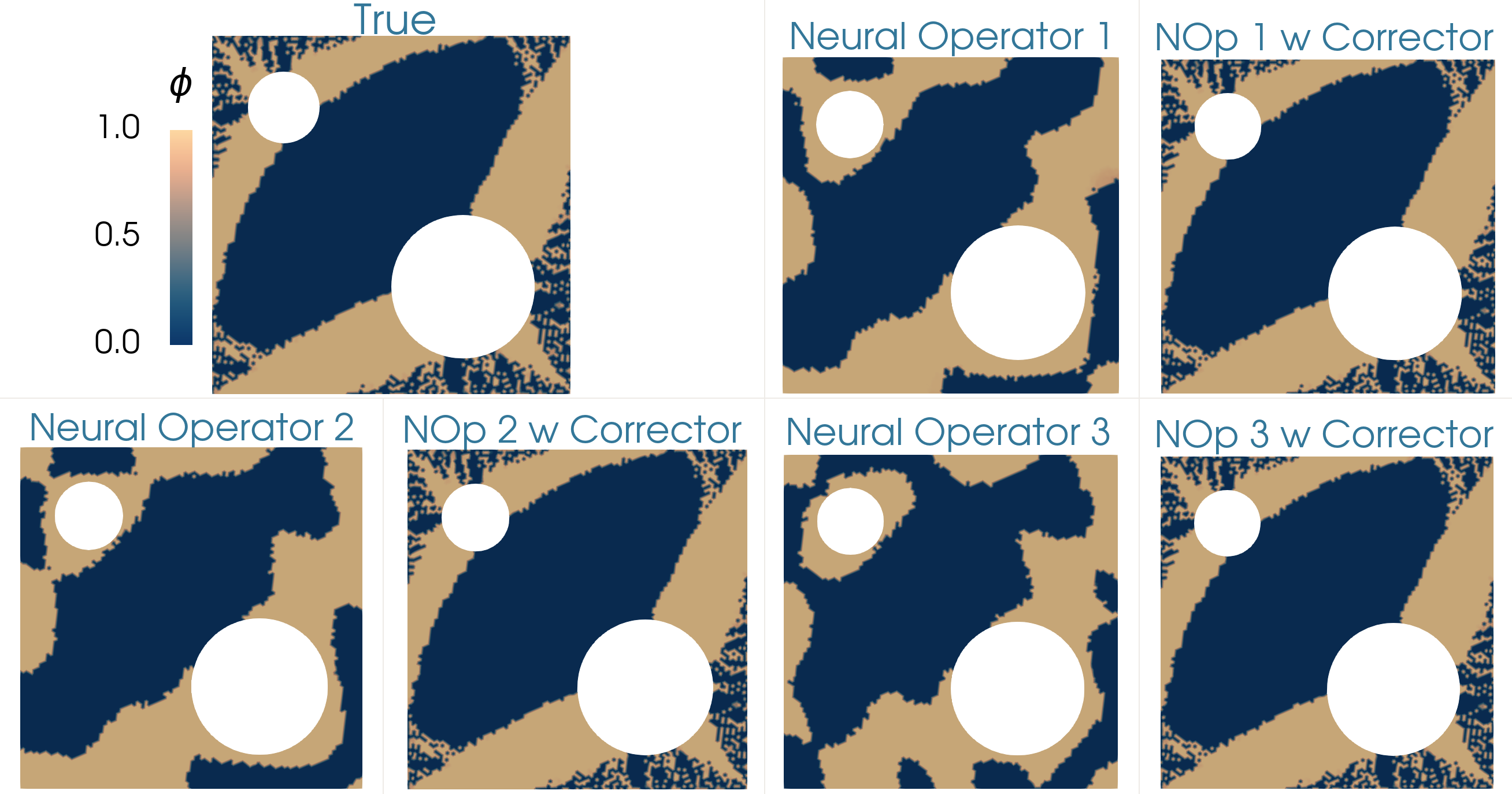
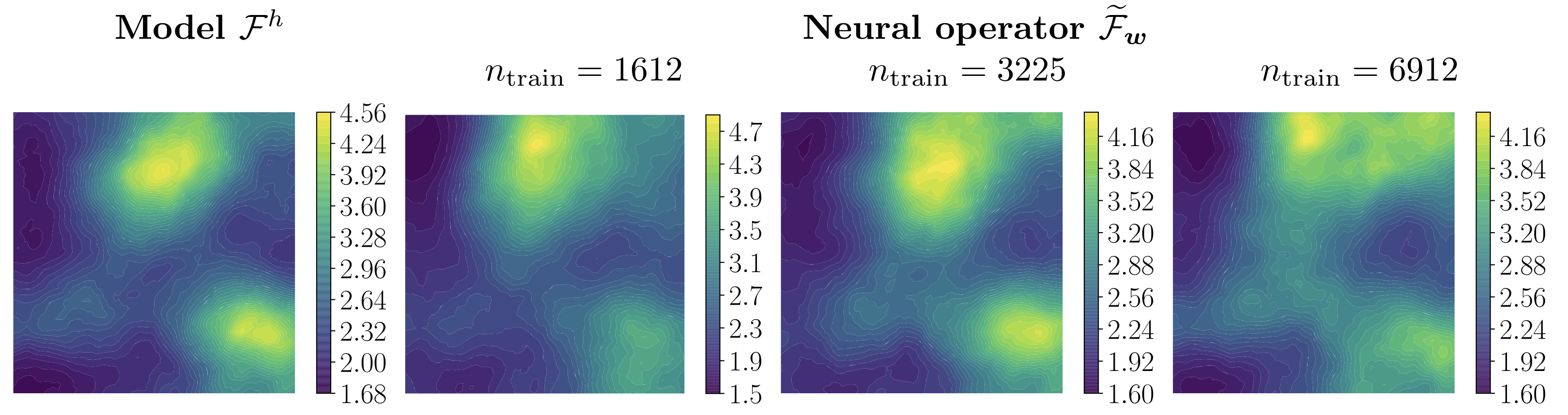
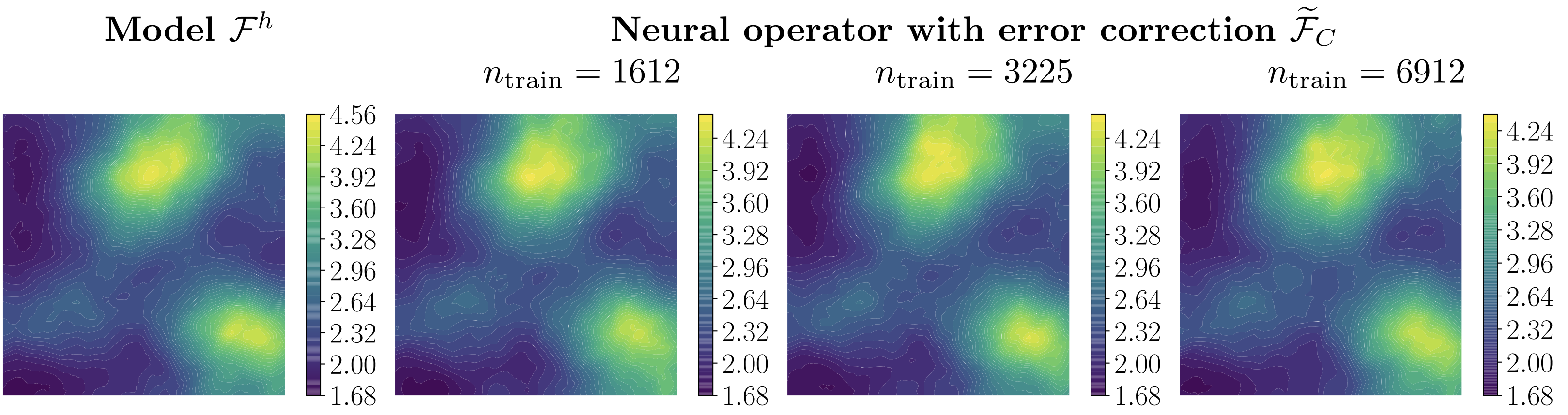
Residual-based estimation and correction of neural-operator error in forward simulation, Bayesian inference and topology optimization.

Python implementations of neural operators and the residual-correction schemes, with the notebooks used to test them
Bayesian calibration and model comparison for a continuum SEIRD epidemic model.